
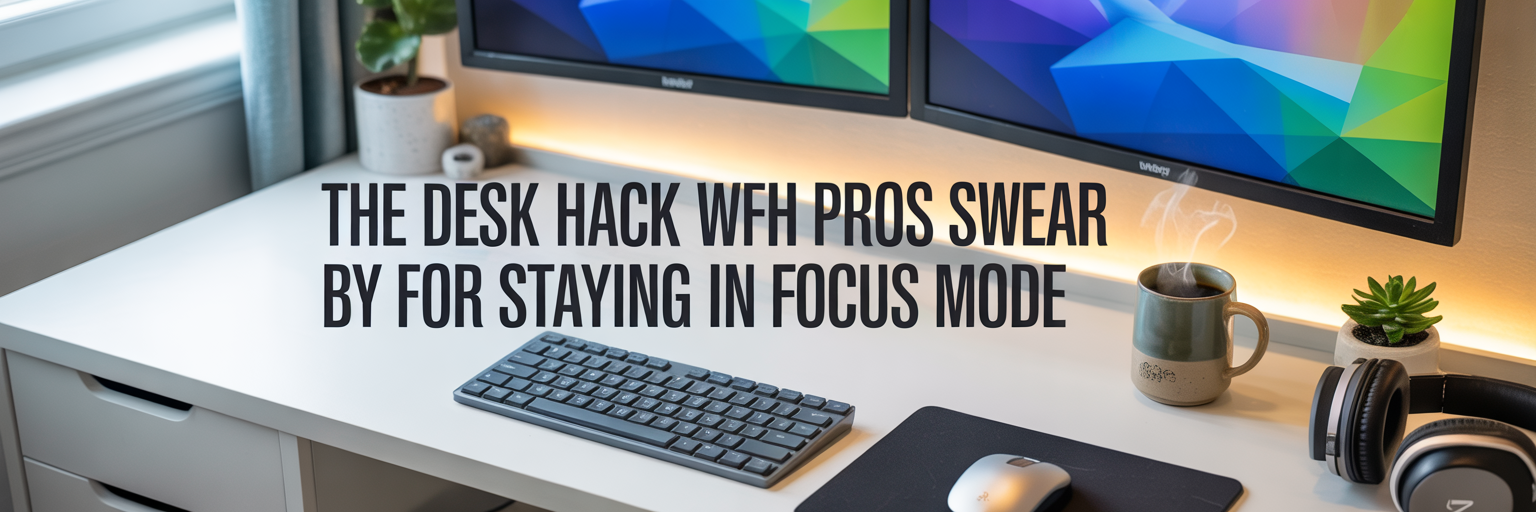
The Desk Hack WFH Pros Swear By for Staying in Focus Mode
Essential Tips
- Prioritize structural verticality with a modular desk shelf - Elevating your primary displays to eye level instantly frees up valuable real estate directly beneath the monitors, clearing away mental clutter. Use this newly reclaimed lower zone exclusively for flat, low-profile tools like a keyboard or writing tablet to create an organized "spatial hierarchy." This architectural layout keeps essential gear within arm's reach while hiding distracting visual mess from your immediate line of sight.
- Choose a premium merino wool felt desk pad - Introducing a high-quality tactile surface acts as a physical boundary zone that anchors your primary work tools, such as your mouse and keyboard. The distinct texture creates a subconscious psychological trigger that signals your brain it is time to transition into "deep work architecture." Additionally, it dampens acoustic vibrations from typing, resulting in a quieter, more serene sensory environment.
- Utilize magnetic cable anchors to eliminate visual noise - Exposed cords running erratically across a workspace act as a constant, subtle drain on your focus and attention span. Anchor heavy-duty magnetic blocks or routing clips along the back edge of your desk furniture to lock charging cables permanently into place when unattached. Keeping power lines out of sight preserves a clean visual flow that reduces friction during transitions between tasks.
- Opt for directional monitor light bars over harsh overhead lighting - Standard ambient room lights often cast annoying reflections on glass screens, causing severe eye strain and fatigue over long shifts. A clip-on screen light bar projects a precise asymmetric beam directly down onto your document workspace without illuminating the monitor surface itself. This sharp contrast formatting creates a literal spotlight effect that keeps your attention fixed on your immediate work.
- Avoid placing "non-work tactile objects" within your active peripheral field - Items unrelated to your current task, such as personal cell phones, smart home controllers, or loose mail, compete for your cognitive processing power. Keep a clean peripheral zone by strictly limiting your desktop items to structural productivity tools. Stashing secondary electronics in dedicated drawers maintains an
Frequently Asked Questions
We carefully evaluate products based on quality, customer feedback, pricing, and overall value. Our goal is to highlight options that genuinely stand out, not just what’s popular.
This website may earn a commission when you purchase products through certain links. This comes at no extra cost to you and helps us keep our content free and regularly updated.
We respect your privacy and only use data necessary to improve your experience. Your information is handled securely and in accordance with our privacy policy.
We prioritize clarity, relevance, and value. Instead of overwhelming you with endless options, we highlight products that are actually worth your time and attention.
We focus on real value. Products are selected based on research, user feedback, and practical benefits, not just promotional incentives.
Nope. We don’t do paid shout-outs or let brands buy their way into our storefront. Every item you see in our collections was hand-picked because the data and user feedback actually backed it up. We’re here to help you find the best gear, not to give brands a shortcut to your shopping cart.